
A denial letter is not the end of a claim. Under the Appeals Modernization Act, VA gives you three ways to ask for another look. Picking the right one depends on a single question: is the problem the evidence, or how VA read it?
| Option | How it works | Best when |
|---|---|---|
| Supplemental Claim (VA Form 20-0995) | You submit new and relevant evidence, and VA decides the claim again. You can also ask VA to gather records you identify. | Something was missing: a diagnosis, records, lay statements, or a medical opinion linking the condition to service. |
| Higher-Level Review (VA Form 20-0996) | A more senior reviewer looks at the same evidence. No new evidence is allowed. You can request an informal conference to point out the error. | The evidence was already strong, and VA misapplied the rules or overlooked something in the file. |
| Board Appeal (VA Form 10182) | A Veterans Law Judge reviews the case. You choose a docket: direct review, evidence submission, or a hearing. | The case is complex, or earlier reviews haven't resolved it. |
For most decisions, filing any of the three within one year of the decision letter keeps the claim continuously pursued, which protects your original effective date. You can file a Supplemental Claim after a year, but the effective date generally moves to the date of the new filing. For a Board Appeal, the one-year deadline is firm.
Read the decision letter closely. It lists the evidence VA considered and the reason for each denial. If it says there was no link between your condition and service, or the examiner's opinion was negative, that tells you what the next filing has to answer.
The most common reason I see is a missing or weak nexus: VA accepted the diagnosis and the in-service event but found no medical evidence connecting them, often after a VA examiner gave a brief negative opinion. A Higher-Level Review can't fix that, because no new evidence is allowed. A Supplemental Claim with a well-reasoned independent medical opinion can.
When the decision got the facts right but assigned too low a rating, look at what the rating criteria require and whether the record shows it. Missing flare-up information from a C&P exam is a frequent cause. New evidence of current severity can support a Supplemental Claim, and a clear legal error can support a Higher-Level Review.
An accredited VSO, claims agent or attorney can help you choose the lane. Our role is the medical evidence: a Nexus Letter or DBQ that addresses the specific reason VA gave.
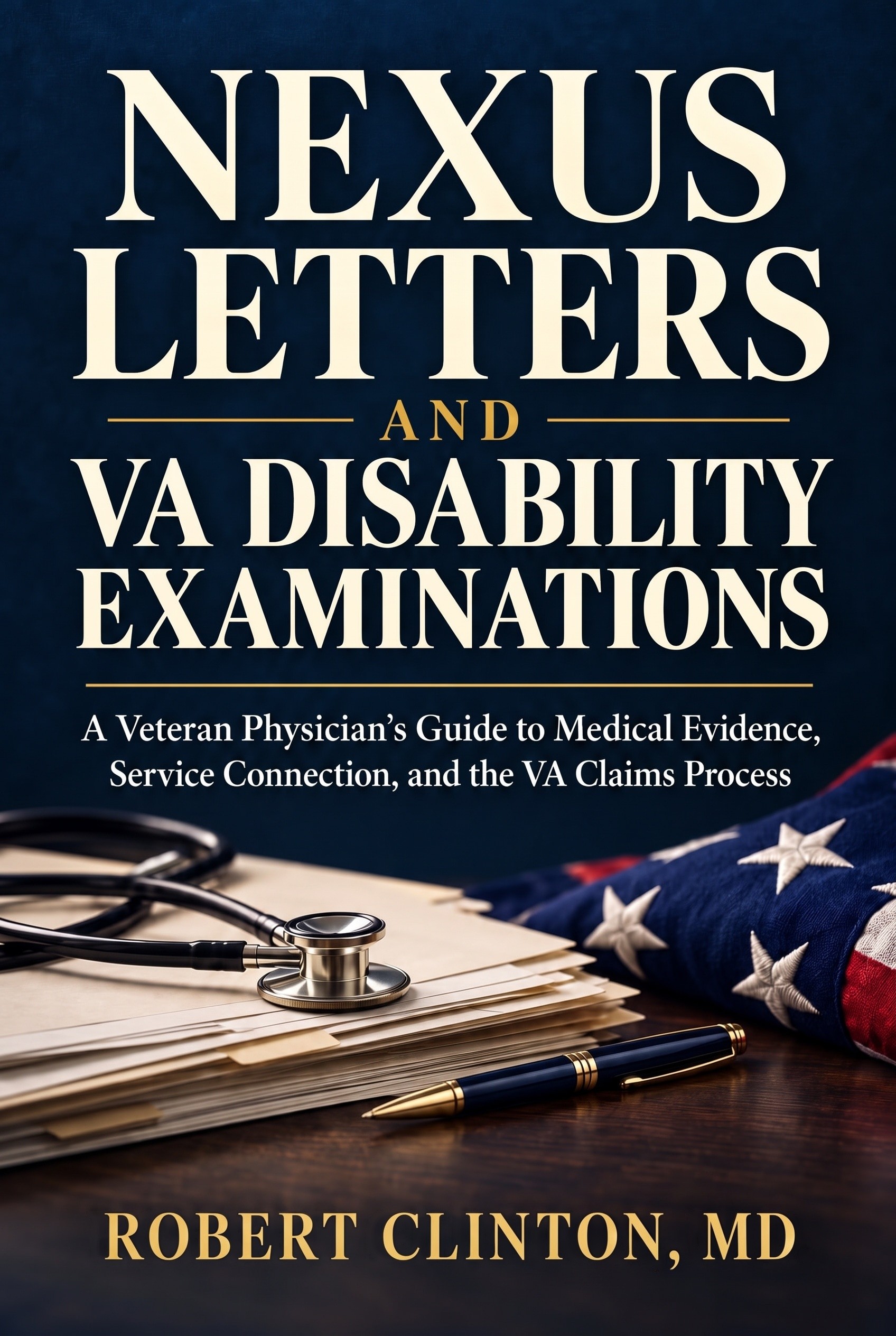
The book
Nexus Letters and VA Disability Examinations
Dr. Clinton's guide to medical evidence, service connection and the VA claims process. Paperback, linen hardcover and ebook.
Get the book
Dr. Robert Clinton is a former Army physician at Fort Bragg and a 100% service-connected disabled veteran. Since 2011 he has performed or taken part in more than 30,000 VA disability exams and DBQs. More about Dr. Clinton
This article is general information, not medical or legal advice. NEXUS Ready provides medical evidence and does not represent veterans in claims. Every claim depends on its own record.
Call (910) 830-1587 (24/7) or email info@nexusready.net.
 NEXUS