
Veterans often tell me their PTSD rating feels arbitrary. Two people with the same diagnosis end up at 30% and 70%, and neither one knows why. The answer is almost always in how the rating formula works and what ended up in the file.
VA doesn't have a separate scale for PTSD. PTSD, major depression, generalized anxiety disorder, panic disorder, bipolar disorder and most other mental health diagnoses are all rated under the same General Rating Formula for Mental Disorders in 38 CFR § 4.130. The possible ratings are 0, 10, 30, 50, 70 and 100%.
What the formula measures isn't the diagnosis itself. It measures occupational and social impairment: how much the condition gets in the way of work and relationships.
The symptoms in each level are examples, not a checklist. The Federal Circuit said in Vazquez-Claudio v. Shinseki (2013) that the rating turns on whether symptoms like those listed cause the level of impairment described. You don't need every symptom on a line, and a symptom that isn't listed still counts if it causes that kind of impairment.
Under 38 CFR § 4.126, the rater has to consider how often symptoms happen, how severe they are, how long they last, and how well you function between bad stretches. The rating is supposed to rest on all the evidence that bears on impairment, not only on what the examiner saw on the day of the exam.
That matters because a lot of veterans present well for an hour. They showered, they drove themselves, they kept it together. If the file shows nothing else, the exam is all the rater has. See my notes on preparing for the C&P exam.
Show the impairment, not just the symptoms. "I have nightmares" tells a rater very little. "I wake up two or three times a night, I've been written up twice this year for falling asleep at work, and I stopped going to my kids' games because of crowds" tells them about work and social function, which is exactly what the formula measures.
If the rating doesn't match the record, an independent medical opinion that walks through the full history, applies the formula, and explains the reasoning can give a rater something to weigh against a thin exam.
If you are thinking about hurting yourself, get help now. Call the Veterans Crisis Line: dial 988, then press 1, or text 838255. In an emergency, call 911. Your safety matters more than any claim.
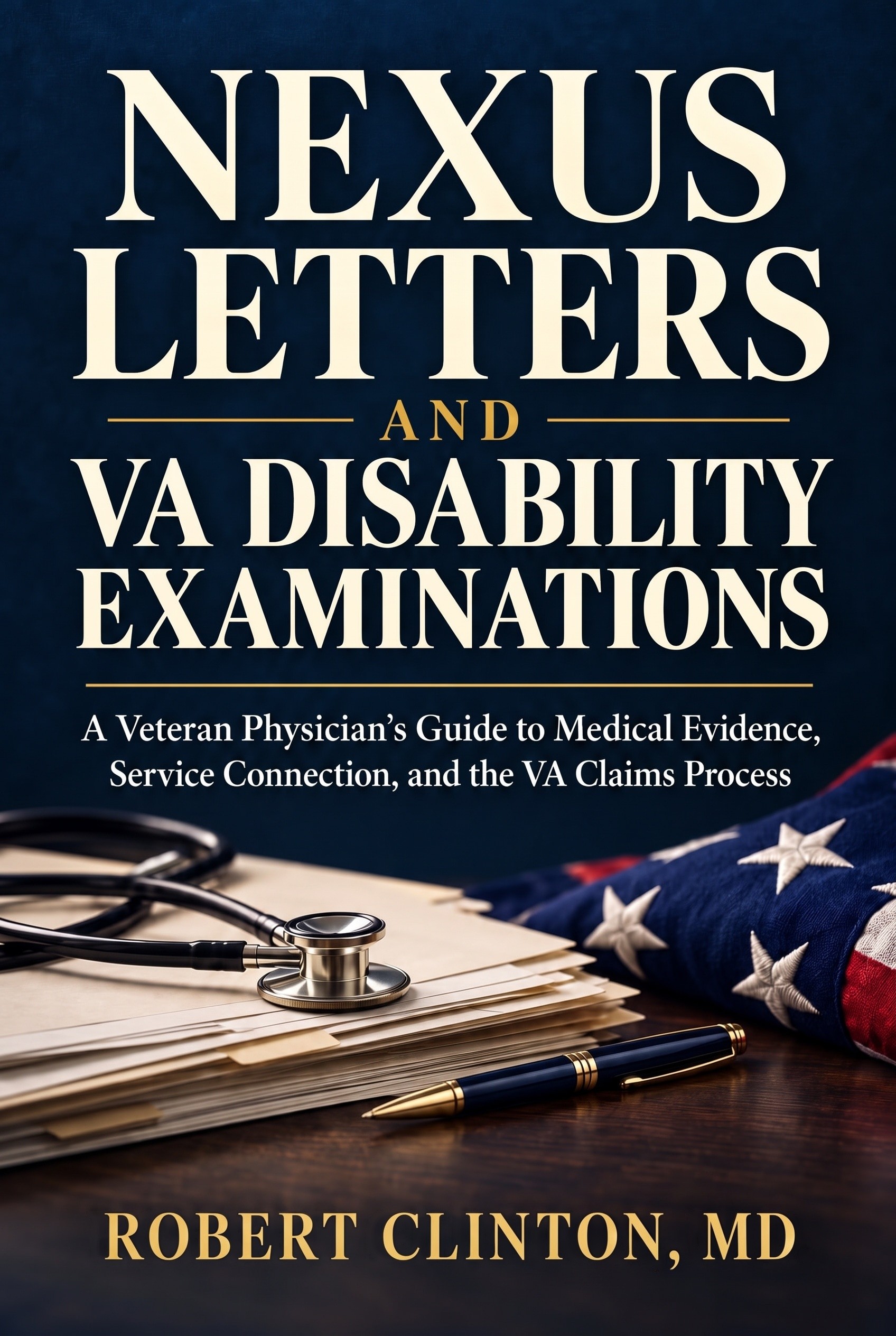
The book
Nexus Letters and VA Disability Examinations
Dr. Clinton's guide to medical evidence, service connection and the VA claims process. Paperback, linen hardcover and ebook.
Get the book
Dr. Robert Clinton is a former Army physician at Fort Bragg and a 100% service-connected disabled veteran. Since 2011 he has performed or taken part in more than 30,000 VA disability exams and DBQs. More about Dr. Clinton
This article is general information, not medical or legal advice. Every claim depends on its own record, and VA alone decides ratings.
Call (910) 830-1587 (24/7) or email info@nexusready.net.
 NEXUS